 Book Now!
In today’s rapidly evolving workplace, emotional intelligence has become a defining factor in leadership success. Leaders are no longer judged only by technical expertise or strategic thinking, but increasingly by how well they understand, manage, and respond to emotions, both their own and others’. As organizations face constant change, uncertainty, and human complexity, emotional intelligence is now central to building trust, engagement, and sustainable performance.
Emotional intelligence in leadership is the ability to recognize, understand, and manage emotions effectively in yourself and others to guide better decisions and relationships.
In practical terms, it means leaders can stay calm under pressure, respond instead of react, and communicate in ways that build psychological safety. Moreover, emotionally intelligent leaders are more aware of team dynamics, which allows them to navigate conflict with clarity rather than escalation. According to psychologist Daniel Goleman’s widely referenced model, emotional intelligence includes self-awareness, self-regulation, motivation, empathy, and social skills. (Source: Harvard Business Review)
Emotional intelligence matters more than ever in leadership because workplaces are now more complex, emotionally demanding, and change-driven than traditional business environments.
As hybrid work, global teams, and constant disruption increase, leaders are expected to manage not only tasks but also emotional well-being. Furthermore, employees today expect empathy, transparency, and human-centered leadership. In addition, research shows that emotionally intelligent leaders improve retention, engagement, and productivity. Therefore, EQ is no longer optional; it is a core leadership requirement in modern organizations.
The link between emotional intelligence and leadership effectiveness lies in how well leaders influence people, build trust, and sustain performance under pressure.
When leaders demonstrate high EQ, they communicate more clearly, resolve conflict faster, and create stronger team alignment. Consequently, employees feel heard and valued, which directly improves motivation. On the other hand, leaders with low emotional intelligence often struggle with resistance, disengagement, and high turnover. According to TalentSmart research, 90% of top performers have high emotional intelligence, showing a strong correlation between EQ and success.
Emotional intelligence in leadership is built on a set of core skills that shape how leaders think, respond, and connect with others. These skills directly influence team trust, communication, and overall workplace effectiveness.
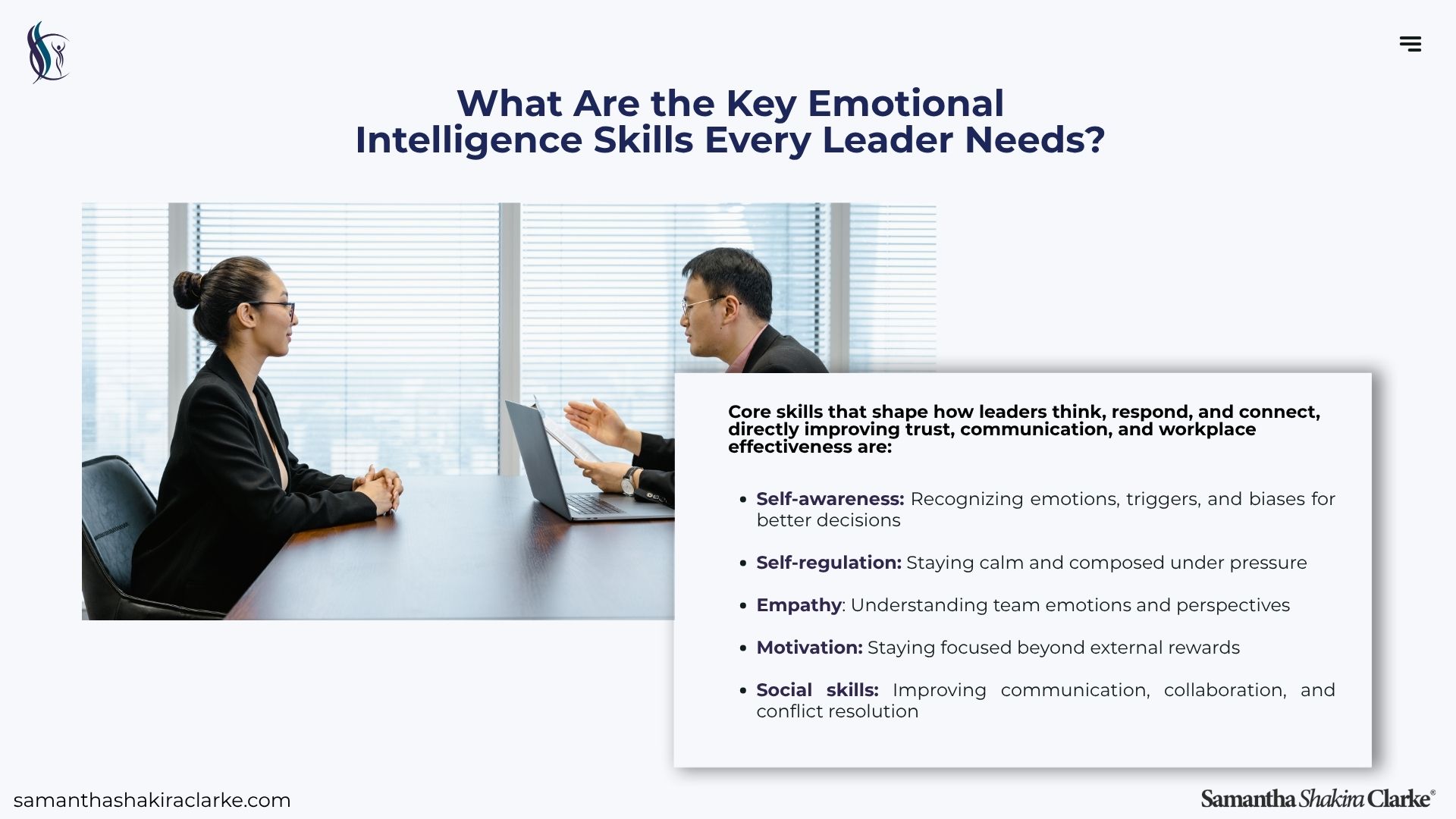
Emotional intelligence impacts leadership in the workplace by improving communication, strengthening team relationships, and enhancing decision-making quality.
When leaders apply EQ consistently, workplace culture becomes more open and psychologically safe. As a result, employees are more likely to share ideas, raise concerns, and collaborate effectively. Moreover, emotionally intelligent leadership reduces workplace stress because teams feel supported rather than controlled. In contrast, environments lacking EQ often experience miscommunication, tension, and reduced productivity.
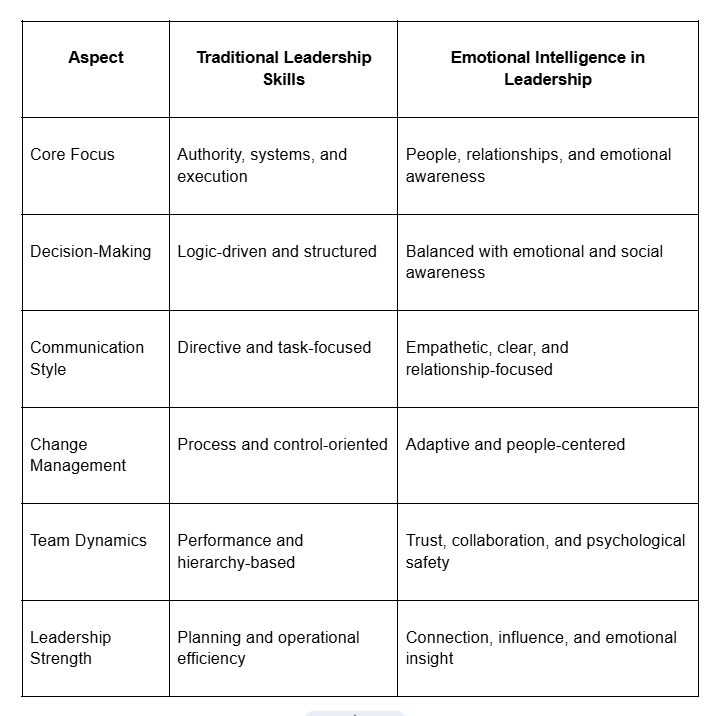
Leadership today is shaped by a balance between technical execution and human understanding. While traditional leadership focuses on structure and results, emotional intelligence adds depth through awareness, empathy, and adaptability.
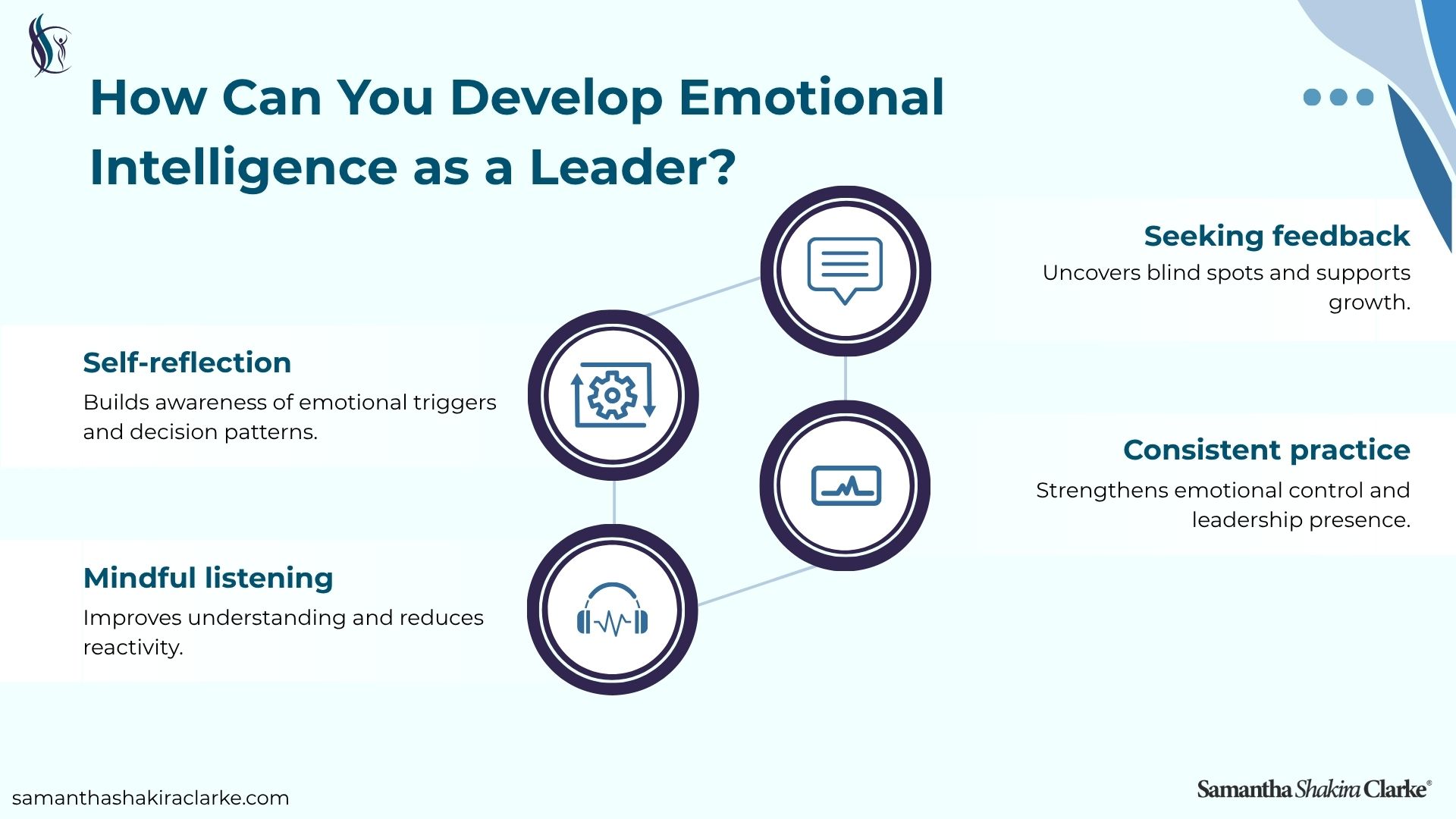
Developing emotional intelligence is a continuous process that requires intentional practice and self-awareness. Over time, small daily habits can significantly improve how leaders think, respond, and connect with others.
To accelerate this growth, structured guidance can make a meaningful difference. SSC Corporate Wellness offers coaching programs designed to help leaders strengthen emotional intelligence and build sustainable, people-centered leadership habits.
Executive coaching plays a crucial role in developing emotional intelligence by providing personalized guidance, accountability, and behavioral feedback.
Through coaching, leaders gain deeper insight into their emotional responses and decision-making patterns. Moreover, coaches help translate awareness into practical workplace behavior. As a result, leaders become more intentional in communication, conflict resolution, and team engagement. According to the International Coaching Federation, organizations that invest in coaching report improved leadership effectiveness and stronger workplace culture.
A leader with high emotional intelligence consistently demonstrates self-control, empathy, adaptability, and strong interpersonal awareness in how they lead and interact with others.
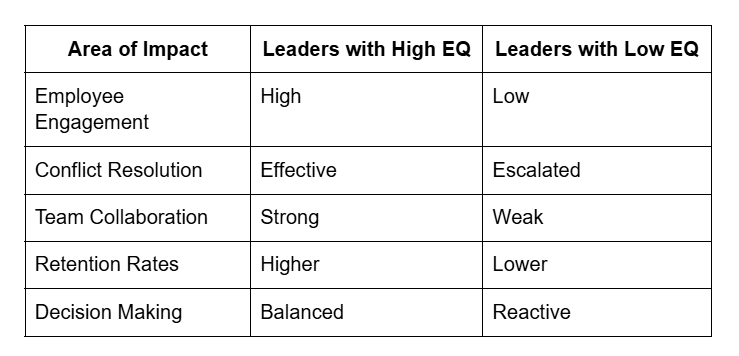
(Source: Aggregated findings from Harvard Business Review & TalentSmart research)
Emotional intelligence is no longer just a leadership advantage; it is a leadership necessity in today’s complex and fast-changing work environment.
As organizations continue to evolve, leaders who prioritize EQ will consistently outperform those who rely solely on traditional management approaches. Therefore, developing emotional intelligence is not just about personal growth, but about building healthier teams, stronger cultures, and more sustainable success. If you are looking to strengthen emotional intelligence in your leadership journey, SSC Corporate Wellness offers tailored coaching and development programs designed to help leaders lead with clarity, empathy, and impact. Get in touch now to learn more.


Samantha Shakira Clarke is an established keynote speaker, psycho-somatic coach, and founder of SSC Corporate Wellness—an organization dedicated to bringing mindfulness, nervous system education, and trauma-informed leadership practices into workplaces across North America and beyond.
Her approach bridges neuroscience, somatic psychology, and real-world application—offering sessions that are practical, engaging, and rooted in lived experience. She's worked with Fortune 500 companies, global tech firms, safety organizations, and youth advocacy centres, and is known for creating spaces that feel both human and impactful.


