
Decision-Making Under Pressure: Techniques for Executive Leaders



Every leader faces moments where decisions cannot wait. Tight deadlines, high stakes, and incomplete information can quickly turn even simple choices into overwhelming challenges. Yet, the ability to make clear, confident decisions under pressure is what separates reactive leadership from intentional leadership.
In fast-moving environments, hesitation can be just as costly as poor judgment. Therefore, developing the ability to think clearly under pressure is not optional for executive leaders. It becomes a core leadership competency that shapes outcomes, culture, and long-term success.
What Are Decision-Making Skills?
Decision-making skills are the ability to assess situations, evaluate options, and choose the most effective course of action. These skills combine critical thinking, emotional intelligence, and sound judgment to guide leaders through uncertainty.
At the same time, strong decision-making is not about always being right. Instead, it is about making informed, timely choices with the best available information. Leaders who develop this capability can move forward with clarity, even when conditions are less than ideal.
Why Decision-Making Skills Matter in Leadership
Decision-making skills shape far more than just outcomes. They influence how your team shows up, how quickly work moves forward, and how much trust people place in your leadership. When decisions are clear and consistent, they create a sense of direction and stability that people can rely on, even during uncertainty.
Research from McKinsey shows that organizations with effective decision-making practices are more likely to outperform their peers. On the flip side, when decisions are delayed, unclear, or constantly changing, it can create confusion and hesitation within teams. Over time, this slows momentum, weakens alignment, and makes it harder for people to move forward with confidence.
What Makes Decision-Making Under Pressure So Difficult?
Decision-making under pressure feels difficult because everything speeds up at once. You are dealing with limited time, high stakes, and a flood of information, all while trying to stay clear-headed. In these moments, the brain naturally shifts into a more reactive mode, which makes it harder to slow down and think things through. Instead of carefully weighing options, there is a pull to act quickly just to relieve the pressure.
According to the American Psychological Association, stress can negatively affect memory, focus, and problem-solving ability. This is why even experienced leaders can find themselves second-guessing, overlooking important details, or leaning too heavily on instinct. Over time, pressure can narrow your perspective, making it harder to see the bigger picture or consider long-term consequences, which is exactly when thoughtful decision-making matters most.
Core Decision-Making Skills Every Executive Needs
Effective decision-making relies on a set of core skills that help leaders stay grounded and focused, especially in high-pressure environments.
- Clarity and Critical Thinking
Leaders must clearly define the problem and evaluate different perspectives before acting. This prevents reactive decisions and ensures that the root issue is addressed rather than surface-level symptoms.
- Emotional Regulation and Adaptability
Staying calm under pressure allows leaders to think rationally and respond thoughtfully. At the same time, adaptability ensures they can adjust decisions as new information emerges without losing direction.
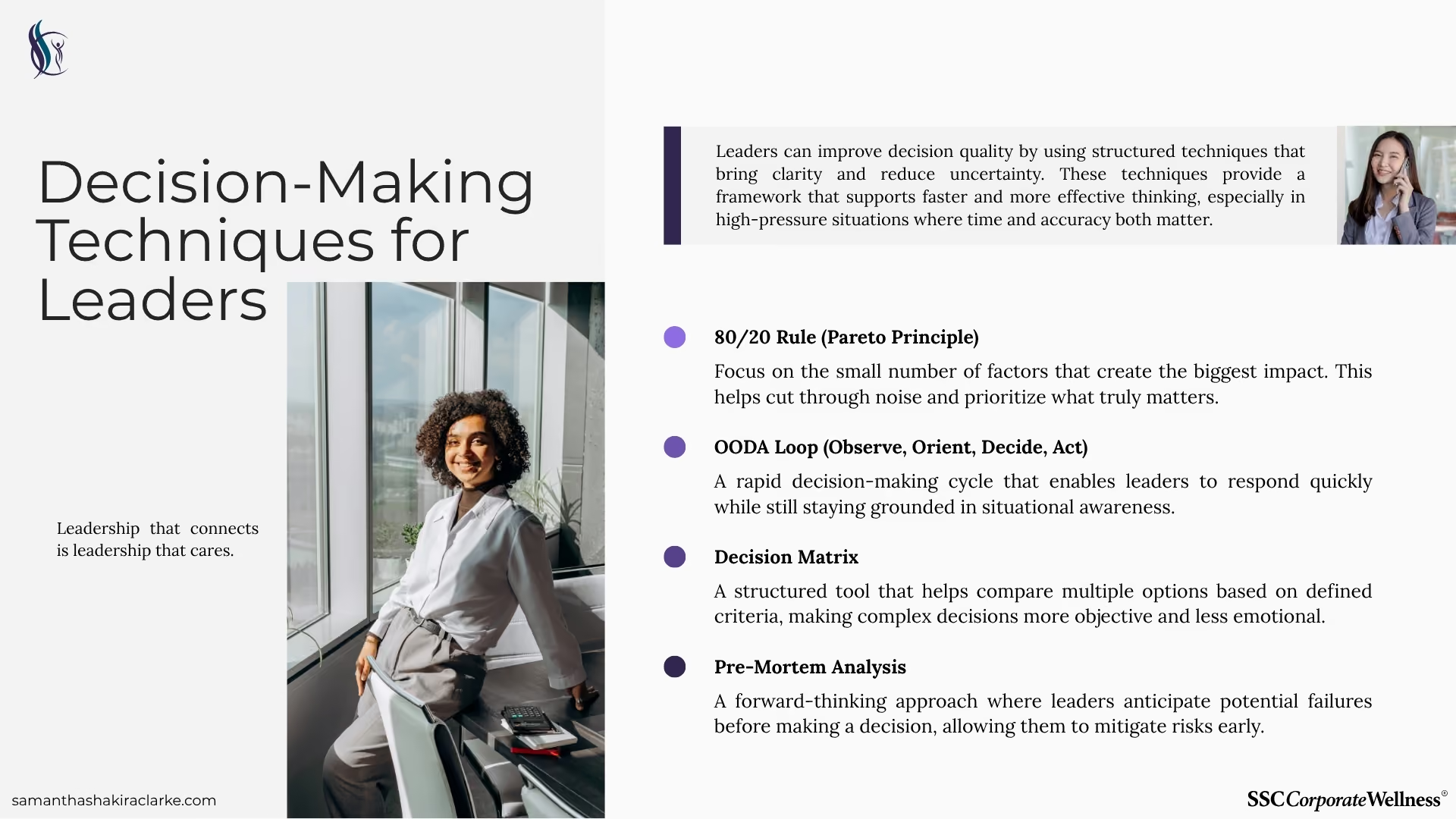
Decision-Making Techniques for Leaders
Leaders can improve decision quality by using structured techniques that bring clarity and reduce uncertainty. These techniques provide a framework that supports faster and more effective thinking, especially in high-pressure situations where time and accuracy both matter.
- 80/20 Rule (Pareto Principle)
Focus on the small number of factors that create the biggest impact. This helps cut through noise and prioritize what truly matters.
- OODA Loop (Observe, Orient, Decide, Act)
A rapid decision-making cycle that enables leaders to respond quickly while still staying grounded in situational awareness.
- Decision Matrix
A structured tool that helps compare multiple options based on defined criteria, making complex decisions more objective and less emotional.
- Pre-Mortem Analysis
A forward-thinking approach where leaders anticipate potential failures before making a decision, allowing them to mitigate risks early.
Over time, consistently using these techniques builds confidence, reduces impulsive choices, and strengthens overall decision-making under pressure.
How to Make Better Decisions Under Pressure (Step-by-Step)
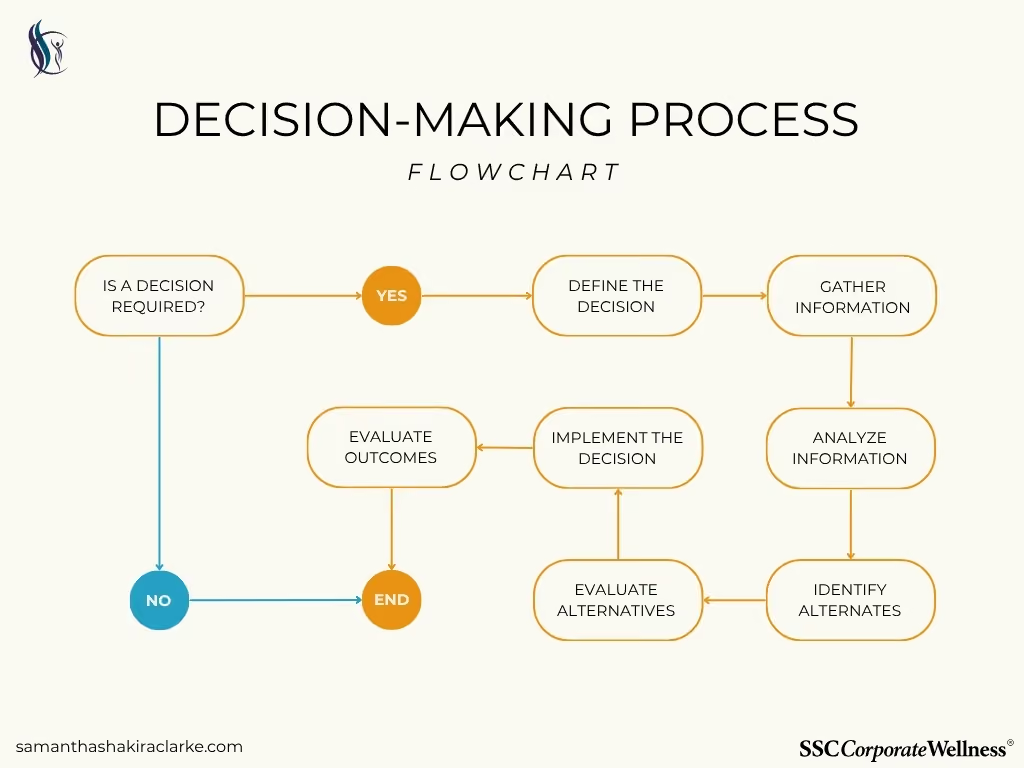
Making better decisions under pressure requires a simple and repeatable process. Structure reduces overwhelm and creates a sense of control, even in uncertain situations.
- Follow a Clear Decision Process
Start by pausing briefly to regulate your response. Then define the problem clearly, gather only essential information, and evaluate your options based on impact and feasibility. As highlighted in this article on leading with empathy, staying emotionally aware as a leader helps you make decisions that are not only effective but also considerate of your team’s well-being.
- Commit, Communicate, and Reflect
Make the decision with confidence and communicate it clearly to your team. Afterward, reflect on the outcome to identify lessons and improve future decision-making.
Common Decision-Making Mistakes Leaders Make
Many leaders unintentionally weaken their decision-making by falling into common patterns, particularly when working under pressure. Overthinking is one of the most common challenges, as continuously gathering information or revisiting the same options can lead to unnecessary delays and missed opportunities. While careful analysis is important, effective leaders also recognize when they have enough information to make a decision and move forward.
Relying too heavily on intuition can be equally limiting. Experience and instinct can be valuable, especially when time is limited, but relying on them alone can cause leaders to overlook important data, alternative perspectives, or potential risks. Similarly, allowing emotions to drive decisions can lead to reactive choices, particularly when leaders are dealing with stress, conflict, or uncertainty. Learning to recognize emotions without allowing them to dictate the outcome helps leaders maintain better judgment.
Another common mistake is avoiding difficult decisions or seeking consensus on every issue. While collaboration is valuable, trying to get everyone to agree can slow progress and create uncertainty within a team. Leaders must sometimes make difficult calls even when there is no perfect solution or complete agreement.
Finally, leaders can become too focused on solving the immediate problem without considering the long-term consequences of their decisions. A solution that works today may create new challenges later. Strong decision-makers therefore consider both the immediate impact and the bigger picture, while remaining willing to reassess their choices when new information or circumstances emerge.
How to Improve Your Decision-Making Skills
Improving decision-making skills requires intentional practice and continuous reflection. Like any leadership capability, it strengthens through experience and awareness. One effective approach is to regularly reflect on past decisions to identify patterns, blind spots, and lessons that can inform future choices. Seeking diverse perspectives also helps challenge assumptions and reduce bias, leading to more balanced and informed outcomes. According to Harvard Business Review, leaders who actively reflect on their decisions significantly improve their future judgment.
At the same time, strengthening your decision-making requires building emotional intelligence and creating reliable systems you can fall back on under pressure. When leaders learn to regulate stress, they are better able to separate emotion from logic and respond with clarity. Additionally, using structured frameworks, setting clear decision criteria, and practicing timely decision-making in low-risk situations can significantly improve confidence. Over time, these habits create consistency, allowing leaders to make faster, more effective decisions without feeling overwhelmed.
The Role of Executive Coaching in Decision-Making
Executive coaching plays a powerful role in strengthening decision-making. It provides leaders with a structured space to reflect, gain perspective, and develop more effective thinking patterns.
Through coaching, leaders can identify blind spots, manage stress more effectively, and apply proven frameworks to real-world challenges. This support helps transform decision-making from a reactive process into a strategic one.
At SSC Corporate Wellness, we help leaders build clarity, resilience, and confidence in their decision-making. With the right guidance, leaders can navigate pressure with greater ease and intention.
Conclusion
Decision-making under pressure is not about eliminating stress. Instead, it is about learning how to think clearly despite it. When leaders develop strong decision-making skills, they create stability not only for themselves but also for their teams.
By combining structure, self-awareness, and proven techniques, you can make better decisions in even the most demanding situations. Over time, this strengthens both your leadership presence and your organizational impact.
If you are ready to enhance your decision-making skills and lead with greater clarity, SSC Corporate & Personal Wellness is here to support your journey. Get in touch now through mail, or book a discovery call to unlock the secrets to a better decision making world.

Turn the science into a shared practice.
.avif)
.avif)
.avif)
