 Book Now!
Stress does not mean you are weak or incapable. It often means you care deeply about your work, your responsibilities, and your impact. However, when pressure becomes constant, your nervous system never fully resets. Over time, that strain affects your focus, mood, health, and relationships. At SSC Corporate Wellness, we see how high performers silently carry this weight. The good news is that effective stress management techniques can fit into even the busiest schedule. You do not need more time. You need the right tools, used consistently and intentionally.
Stress is your body’s natural response to perceived pressure or threat. When you face deadlines, difficult conversations, or heavy workloads, your brain activates the fight or flight response. Your heart rate increases, cortisol rises, and your attention narrows. In short bursts, this response helps you perform. However, when stress becomes chronic, it drains energy, reduces cognitive flexibility, and increases burnout risk.
According to the American Institute of Stress, about 83 percent of US workers report work related stress, and 25 percent say work is their number one stressor. Chronic stress also links to sleep disruption, anxiety, and cardiovascular strain. You can explore more data from the American Institute of Stress. Managing stress matters because it protects both your performance and your long term well being.
The best stress management techniques combine quick relief with long term resilience. Instead of relying on one strategy, effective stress management layers immediate calming tools with habits that prevent repeated overload. Breathing regulates your nervous system in the moment, cognitive reframing clears mental clutter, movement releases physical tension, and healthy boundaries reduce chronic stress cycles. When used together, these techniques create steady focus and sustainable performance.
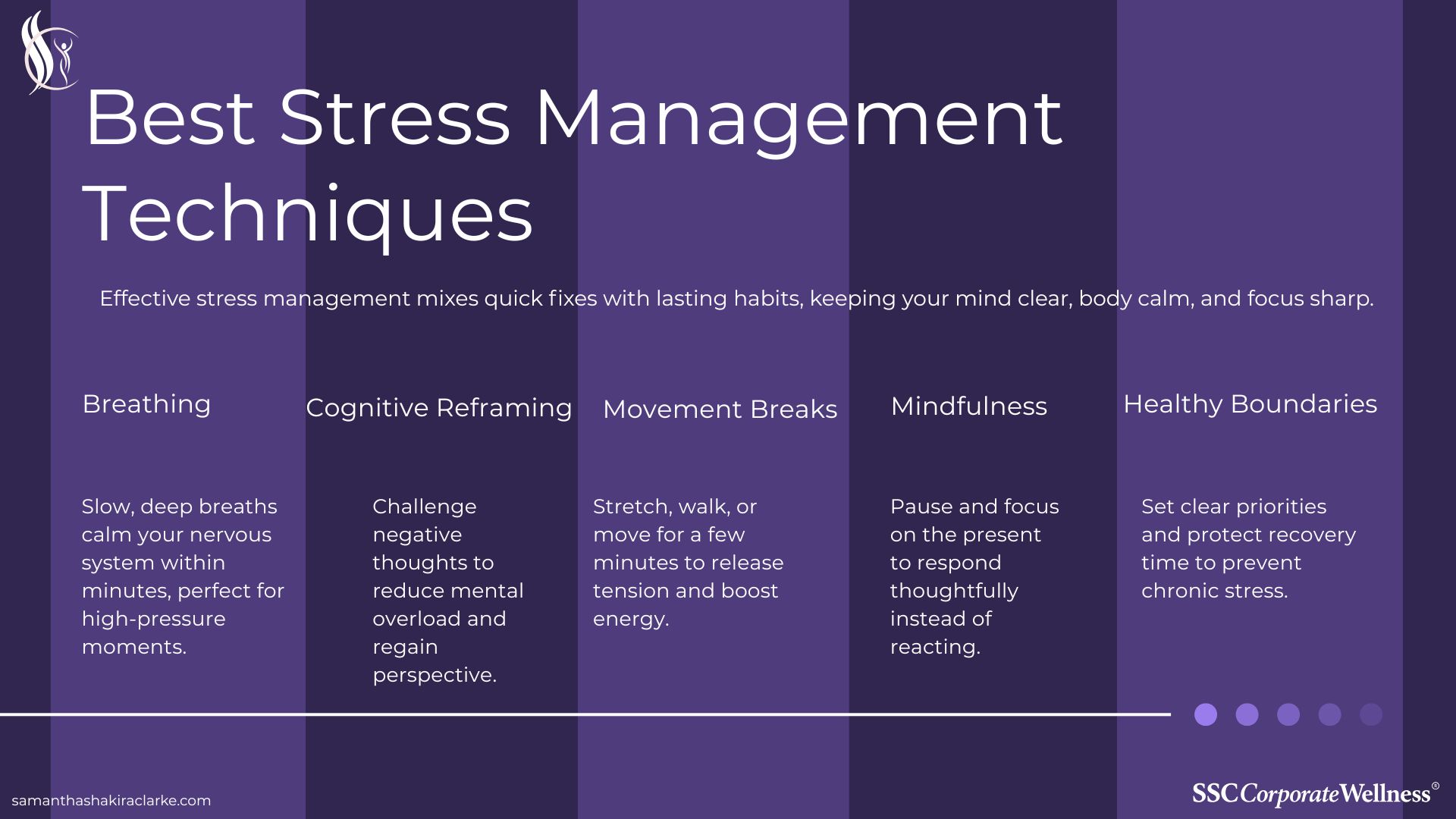
Practical stress management techniques work best when they feel realistic and repeatable. Busy professionals often believe they need long meditation sessions or complete lifestyle overhauls. In reality, small consistent shifts create meaningful change. You can regulate your nervous system in two minutes between meetings. You can reset your focus during a short walk. You can shift your thinking during a stressful email exchange. The key lies in matching the technique to the moment. Below are evidence informed strategies that support calm without disrupting productivity.
Breathing techniques calm your nervous system quickly and effectively. When stress rises, your breath becomes shallow and fast, which signals danger to your brain. Slow, intentional breathing reverses that signal and restores a sense of safety and control.
Because breath travels with you, it becomes the most accessible stress management tool you have. Use it before presentations, during conflict, or after intense focus sessions to reset your internal state.
Mindfulness reduces stress by anchoring you in the present moment. When your mind races through worst case scenarios or unfinished tasks, stress amplifies. Mindfulness interrupts that spiral. You do not need a silent retreat to benefit. Instead, pause for sixty seconds and notice your breath, posture, and surroundings. Label what you feel without judgment. Short guided meditations during lunch breaks also strengthen emotional regulation over time. Studies from Harvard Medical School show that mindfulness practices reduce anxiety and improve emotional resilience.
You can read more about it here. With practice, mindfulness becomes less about sitting still and more about responding rather than reacting.
Movement relieves stress by discharging stored physical tension. When you sit for long hours, your body holds stress in the shoulders, jaw, and lower back. A five minute stretch, stair walk, or light mobility sequence increases circulation and releases tightness. Exercise also stimulates endorphins, which elevate mood naturally. You do not need intense workouts to benefit. Consistent moderate movement supports focus and energy regulation throughout the day. Even standing during calls or walking between meetings reduces mental fatigue. When your body feels supported, your mind follows.
Cognitive techniques manage stress by changing how you interpret events. Stress often intensifies because of catastrophic thinking or unrealistic expectations. Begin by identifying the thought driving your tension. Ask yourself whether the thought is factual or fear based. Replace all or nothing statements with balanced alternatives. For example, shift from “I will fail this project” to “This project feels challenging, and I can take it step by step.” Breaking large tasks into smaller actions also reduces overwhelm.
When you create structure, your brain feels safer and more in control. Over time, this mental reframing strengthens resilience and decision making clarity.
Healthy distraction reduces stress when it interrupts rumination without avoiding responsibility. When you loop on the same worry repeatedly, your nervous system stays activated. A short mental reset can break that cycle. Step outside for fresh air, listen to calming music, or engage in a brief non work activity. The goal is restoration, not escape. Set a timer so the break remains intentional. Afterward, return to the task with renewed focus. This approach prevents burnout while maintaining accountability. Used wisely, distraction becomes a tool for regulation rather than procrastination.
Distraction becomes healthy when it supports recovery and clarity. If you feel mentally flooded, a short break helps your brain reset. However, if you consistently avoid difficult conversations or deadlines, distraction turns into avoidance. Ask yourself whether the break prepares you to re engage productively. If the answer is yes, it likely serves a healthy function. Balance remains essential. Alternate focused work intervals with intentional pauses to maintain sustainable productivity.
Choosing the right stress management technique depends on both the intensity of your stress and the time you have available. If you feel sudden pressure before a meeting or presentation, breathing exercises can calm your nervous system quickly. When mental clutter takes over, cognitive reframing or simple task prioritization can restore clarity. If your body feels tight or restless, movement such as stretching or a short walk often provides immediate relief.
During prolonged high demand periods, it helps to combine several strategies throughout the day rather than relying on just one. Pay attention to your physical sensations, emotional shifts, and energy levels, as these cues signal what you need in the moment. Stress management becomes far more effective when you respond early instead of waiting until exhaustion sets in. With consistent practice, you will naturally recognize which tools work best for specific stress triggers.
Managing stress effectively requires more than good intentions. However, many professionals unknowingly adopt habits that reduce the impact of their efforts. When stress management becomes reactive, inconsistent, or delayed, it loses its power. Recognizing common mistakes is an important first step because awareness allows you to shift from survival mode to sustainable self regulation.
.jpg)
Building sustainable stress management requires integration rather than addition. Instead of adding new tasks, attach techniques to existing routines. Practice deep breathing before opening email. Take a short walk after lunch. Reflect on one positive outcome at the end of each day. Consider scheduling brief recovery blocks between meetings to prevent emotional spillover. At SSC Corporate & Personal Wellness, we support organizations in embedding stress regulation into workplace culture through workshops and practical tools. You can explore our Corporate Wellness Programs and Stress Management Training pages to learn more. When stress management becomes part of your daily rhythm, resilience strengthens naturally.
Stress management techniques empower busy professionals to stay calm and focused without sacrificing ambition. You do not need to eliminate pressure completely. Instead, you can regulate how your body and mind respond to it. Through breathing, mindfulness, movement, cognitive shifts, and intentional resets, you build both immediate calm and long term resilience. Start small. Practice consistently. Over time, these habits create a steadier nervous system and a clearer mind.
If your team needs structured support, SSC Corporate Wellness is here to guide sustainable, science informed stress management strategies that truly work. Reach out to us anytime at team@samanthashakiraclarke.com to learn more or schedule a consultation.
70% of Canadian workers report work‑related stress: Canadian Mental Health Association
30% say work is their top stressor: Canadian Mental Health Association
Regular physical activity significantly lowers stress levels: Canadian Psychological Association
By combining data‑informed strategies with compassionate self‑awareness, you can transform stress from a constant burden into a manageable signal for growth.


Samantha Shakira Clarke is an established keynote speaker, psycho-somatic coach, and founder of SSC Corporate Wellness—an organization dedicated to bringing mindfulness, nervous system education, and trauma-informed leadership practices into workplaces across North America and beyond.
Her approach bridges neuroscience, somatic psychology, and real-world application—offering sessions that are practical, engaging, and rooted in lived experience. She's worked with Fortune 500 companies, global tech firms, safety organizations, and youth advocacy centres, and is known for creating spaces that feel both human and impactful.


