
Does 5 Minutes of Meditation Actually Do Anything for My Brain? Scientifically?



Short answer: yes.
Longer answer: also yes, and in ways we can actually measure.
Five minutes of meditation often gets dismissed as pointless. Too short. Too soft. Not “real” practice. But the brain doesn’t work on moral timelines. It responds to state changes, not effort points.
Here’s what is happening in your brain when you spend five quiet minutes watching trees, listening to rain, or sitting without doing anything productive.
1. Your nervous system shifts out of threat mode
Even brief periods of calm sensory attention increase parasympathetic nervous system activity. This is the branch responsible for rest, digestion, immune repair, and hormonal balance.
Within minutes, heart rate and blood pressure can drop. This is not a mindset shift. It is a physiological one.
2. Stress circuitry quiets down
The amygdala, the brain’s threat detection center, becomes less reactive when attention is anchored in non-threatening sensory input.
Looking at trees. Listening to rain. Feeling your breath. These signals tell the brain that nothing urgent is happening. That message alone reduces stress reactivity.
3. Rumination loses its grip
Meditation softens activity in the default mode network, the system responsible for looping thoughts, self criticism, and mental time travel into the past or future.
You did not solve anything in those five minutes. You interrupted the loop. That interruption conserves mental energy.
4. Neurochemistry shifts subtly but meaningfully
Short periods of mindful attention are associated with:
Lower cortisol
Slight increases in dopamine availability linked to calm focus
Increased alpha brain wave activity, which correlates with relaxed alertness
No fireworks. No transcendence. Just a quieter internal environment.
5. Sensory regions take over from analytical ones
When you listen to rain or watch movement in nature, sensory processing areas become more active while language and evaluation centers dial down.
That is why it feels grounding. The brain literally changes which regions are in charge.
What five minutes does not do
It does not permanently rewire your brain on its own. That part matters.
Five minutes changes your state, not your traits. But repeated state changes are how traits are built over time.
Think of it like brushing your teeth. One brush does not guarantee dental health forever. It still absolutely matters.
Why five minutes can be especially powerful on low energy days
On days when hormones are fluctuating, stress is high, or motivation is low, forcing longer meditation can actually add strain.
Low effort, sensory based attention often works better than disciplined concentration. The brain is already asking for less input, not more control.
So does five minutes do anything?
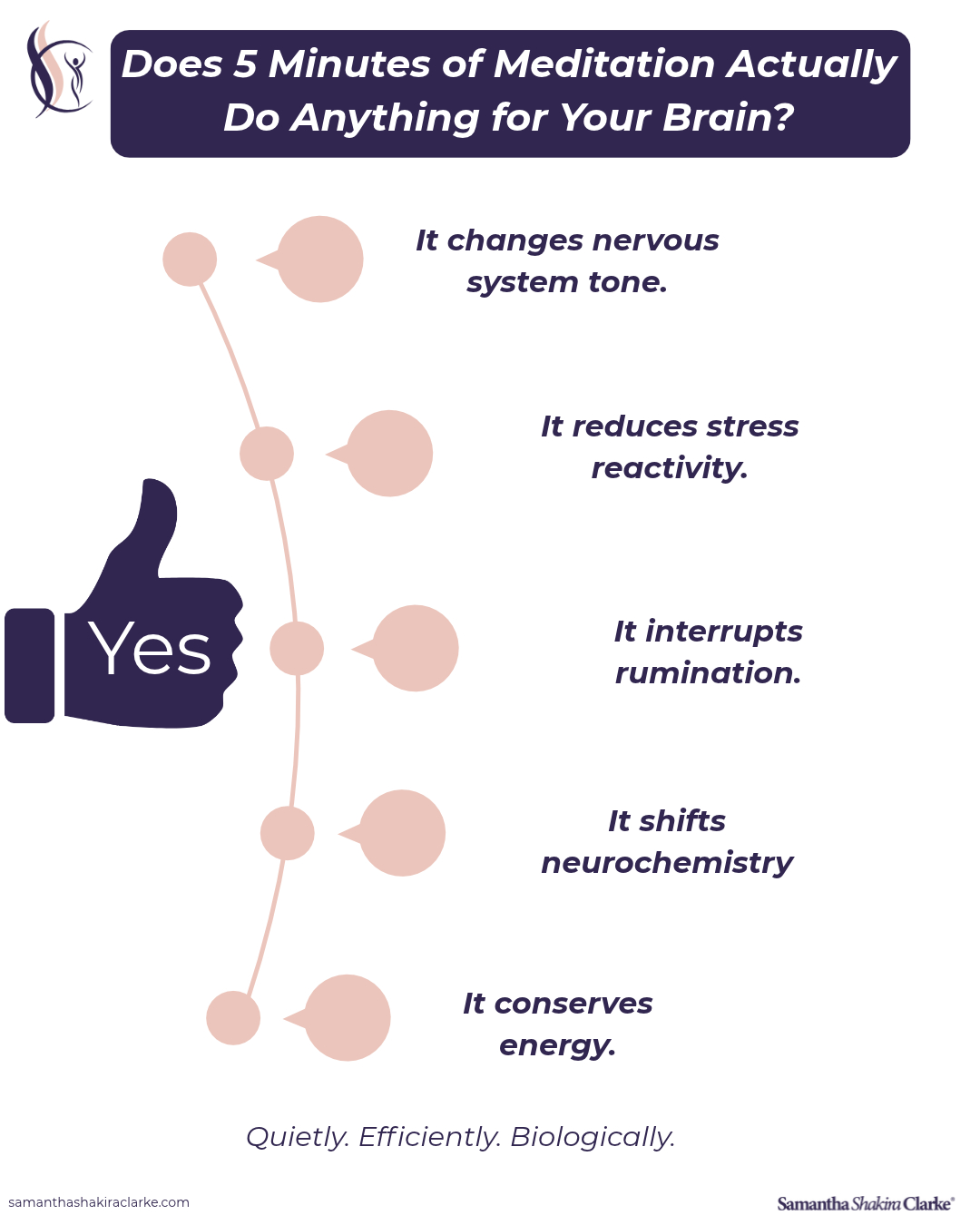
Not everything that works has to feel impressive.

Turn the science into a shared practice.


