Team Over Tasks: Why Mindful Leaders Build People Before Projects

.avif)

When leaders focus on people before projects, something remarkable happens: trust replaces tension, collaboration outshines control, and productivity becomes a natural outcome, not a forced pursuit.
Today’s workplace rewards busyness, but not always balance. Deadlines dominate conversations, and human connection often becomes an afterthought. Yet behind every missed target or silent resignation lies a truth: teams don’t burn out because of the work itself; they burn out when they feel unseen.
When leaders begin to see their people as whole humans rather than task executors, workplaces shift from transactional to transformational.
If you’re a leader sensing disconnection within your team, SSC Corporate & Personal Wellness can help you rebuild psychological safety and emotional alignment through mindful leadership strategies that support both people and performance.
When Productivity Overshadows People
When leaders value output over well-being, they unintentionally create environments where burnout thrives. Studies show that while 77% of employees experience burnout, the root cause often isn’t workload; it’s the lack of recognition, autonomy, and emotional safety.
Constant pressure to “do more” disconnects people from purpose. Teams start focusing on survival instead of synergy. While deadlines get met, creativity, engagement, and morale quietly erode. Productivity at the cost of people isn’t progress; it’s a slow depletion of trust and energy that no metric can measure.
Truly high-performing organizations understand that productivity is born from belonging. When employees feel psychologically safe, they naturally take initiative, innovate, and support one another.
The Myth of Task-First Leadership
Task-first leadership may appear efficient on the surface, but it’s rarely sustainable. When leaders prioritize deadlines above dialogue, they may get results, but they lose resonance. Teams execute tasks, but the connection fades.
True leadership means building capacity, not just completing checklists. For example, consider a mid-sized marketing agency that saw rising turnover despite hitting quarterly targets. When leadership shifted focus to one-on-one emotional check-ins, peer recognition, and mental wellness training, not only did retention improve, but client satisfaction also rose.
When people feel seen, they don’t just work harder, they work with heart.
What High-Performing Companies and Sports Teams Do Differently
Elite teams, whether in business or sport, share one principle: connection before competition.
Organizations like Google and Pixar prioritize psychological safety because they understand that trust is the soil where innovation grows. Similarly, top sports teams like the All Blacks of New Zealand emphasize collective humility, shared purpose, and respect.
Here’s how task-first and team-first approaches differ: When teams feel supported as people, excellence follows naturally.

Lessons from The Five Dysfunctions of a Team
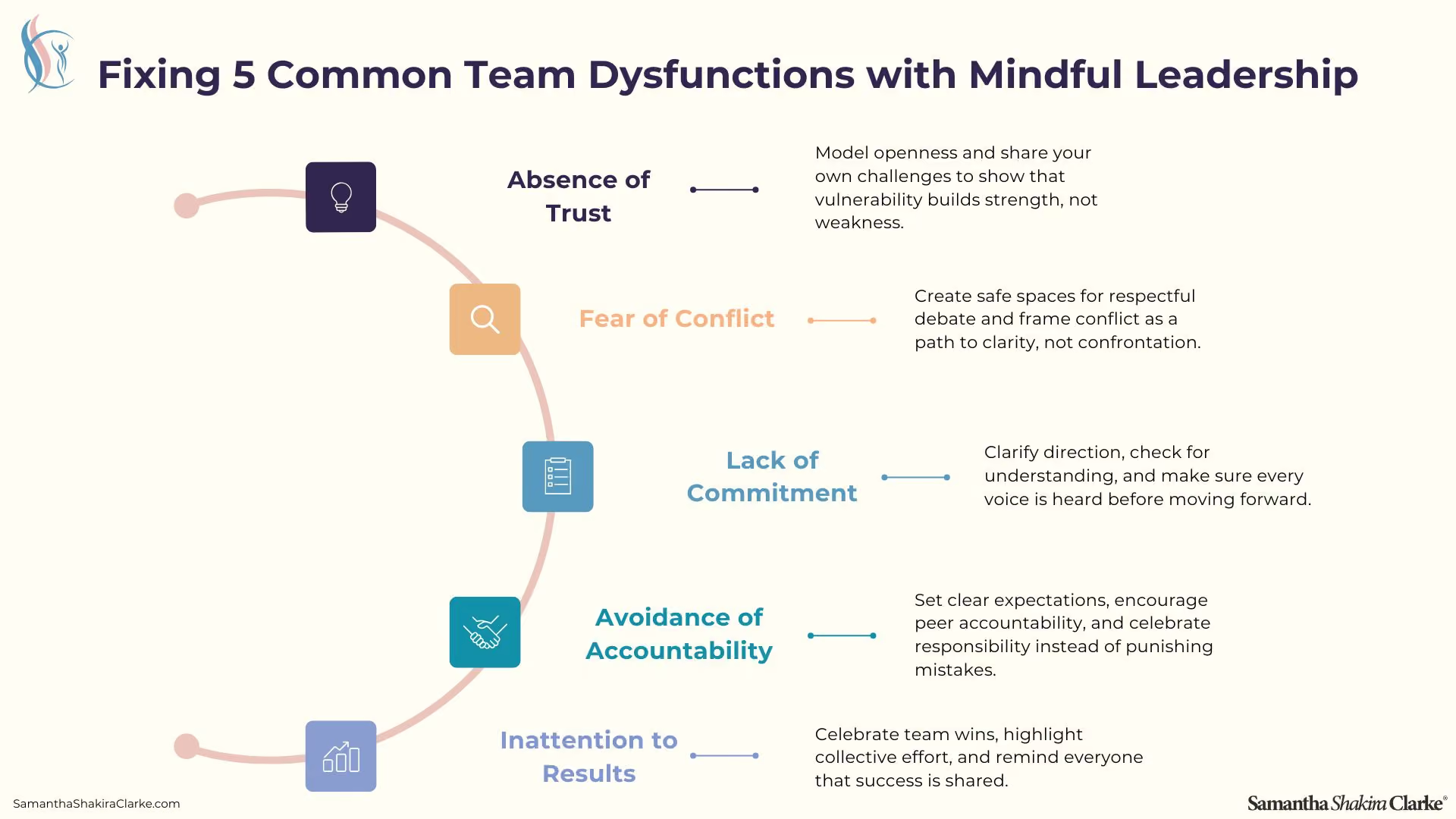
Patrick Lencioni’s The Five Dysfunctions of a Team offers powerful insight into why even talented and well-intentioned groups can struggle, and how mindful leaders can guide them back toward trust, collaboration, and shared success. Each dysfunction represents a breakdown in connection, and each solution calls for compassion, courage, and conscious leadership.
- Absence of Trust
When team members feel unsafe being vulnerable or admitting mistakes, collaboration weakens. Without trust, people withhold feedback, ideas, and even their true selves. Mindful leaders counter this by modeling openness — sharing their own challenges, inviting honest dialogue, and showing that vulnerability is strength, not weakness. - Fear of Conflict
Teams often avoid hard conversations to keep the peace, but silence can erode progress faster than disagreement ever could. Healthy conflict fuels innovation and understanding. Leaders can create safe spaces for discussion by encouraging respectful debate, listening with empathy, and framing conflict as a tool for clarity, not confrontation. - Lack of Commitment
When priorities are unclear or decisions feel top-down, teams lose motivation and direction. Without shared purpose, even capable teams drift. A mindful leader brings alignment through transparency: clarifying goals, checking for understanding, and ensuring that every voice feels heard before commitments are made. - Avoidance of Accountability
When no one feels responsible, progress stalls and frustration grows. Team members may deflect blame or lower expectations to avoid tension. Mindful leaders foster shared responsibility by setting clear expectations, following through with consistency, and celebrating accountability as a sign of mutual respect rather than punishment. - Inattention to Results
When personal recognition outweighs team achievement, collaboration fades. Members may focus on individual wins at the expense of collective success. A mindful leader redirects focus to shared victories, celebrating team milestones, highlighting contributions publicly, and reinforcing that the greatest success is one achieved together.
The Science of Why It Works
Neuroscience confirms what mindful leaders have always known: human connection changes the brain. When employees feel safe and valued, oxytocin, the “trust hormone,” increases, while cortisol, the stress hormone, decreases.
A Harvard Business Review study found that teams with high trust experience 74% less stress and 50% higher productivity. Similarly, Google’s Project Aristotle revealed that psychological safety was the number-one predictor of team success, above skill, tenure, or talent.
When our nervous systems feel regulated, our creativity expands. Mindful leadership doesn’t just improve output; it rewires how teams experience work itself.
Practical Ways to Lead “Team Over Tasks”
Building a people-first culture is not about grand gestures; it’s about consistent care.
- Begin every meeting with a one-minute grounding pause to help everyone reset.
- Ask “How are you?” before “What’s the update?” to show genuine care.
- Integrate gratitude check-ins, and invite team members to share small wins, explore how in Why Gratitude in the Workplace Transforms Culture (and How to Practice It).
- Balance workloads transparently and regularly review capacity.
- Create well-being KPIs alongside traditional performance goals, see how this works in Why Feeding Your Employees’ Brains Is More Profitable Than Feeding Their Paychecks.
- Model healthy boundaries and self-care; leaders set the tone. Dive deeper into emotional awareness through How Inner Child Work Can Improve Leadership.
When leaders lead with awareness, the culture follows with alignment.
When Teams Thrive, Tasks Follow
A thriving team doesn’t just meet goals, it exceeds them. When people feel safe, appreciated, and connected, they naturally become more innovative, adaptive, and loyal.
One SSC client, a healthcare organization, reported a 40% increase in staff engagement within six months of implementing mindful leadership training. The shift wasn’t about adding more initiatives; it was about bringing more intention.
See why many companies are embracing emotional wellness in Are Companies Really Paying for Employees’ Therapists?. The most successful teams breathe together; they regulate, communicate, and move as one.
Closing Reflection — Building Teams That Breathe Together
Mindful leadership is not about perfection; it’s about presence. It’s about remembering that behind every task lies a person, and behind every person lies a story.
When leaders build trust before targets and connection before KPIs, they cultivate resilience, creativity, and genuine commitment.
At SSC Corporate & Personal Wellness, we help leaders create workplaces where people can breathe, belong, and become their best selves, because when teams thrive together, success naturally follows.
Ready to begin your culture transformation?
Email us at team@samanthashakiraclarke.com to start your organization’s mindful leadership journey.

Turn the science into a shared practice.
Related articles
.avif)
.avif)