 Book Now!
If you’ve ever held back an idea in a meeting, stayed silent when something felt off, or watched good people leave because the workplace culture felt unsafe, you know how costly the absence of psychological safety can be. Many employees today aren’t leaving jobs because of pay; they’re leaving because they don’t feel respected, included, or heard.
This article breaks down the thirteen tenets of psychological safety and explains why they matter for leaders, teams, and organizations that want to keep people engaged, supported, and innovative. In short, we’ll explore what psychological safety in the workplace really means and how to create it.
For years, companies treated workplace stress and conflict as personal problems, not organizational ones. But the tide has turned. Regulators now recognize that an unsafe culture doesn’t just damage morale; it can harm employee mental health in ways as serious as physical injuries. In British Columbia, for example, WorkSafeBC includes psychological health and safety in its workplace standards, meaning employers must take steps to prevent bullying, harassment, and toxic environments.
The legal message is clear: leaders who overlook psychological safety risk more than turnover and disengagement. They may face complaints, costly claims, and reputational damage. Protecting employee well-being has become a matter of compliance, and ultimately, trust.
Recent data highlights just how critical psychological safety is in Canadian workplaces. According to the Canadian Labour Congress, seven in ten workers have experienced some form of harassment or violence at work, showing the urgent need for safer environments. At the same time, the Chartered Professional Accountants of BC reports that 30 of every 1,000 Canadian workers miss work each week due to mental health reasons. Together, these numbers paint a clear picture: without prioritizing safety and well-being, organizations risk both the health of their employees and their overall productivity.
The 13 tenets of psychological safety highlight what people need in order to feel safe, valued, and respected at work. Each principle helps organizations create a strong workplace culture where employees don’t just show up; they participate, collaborate, and grow.
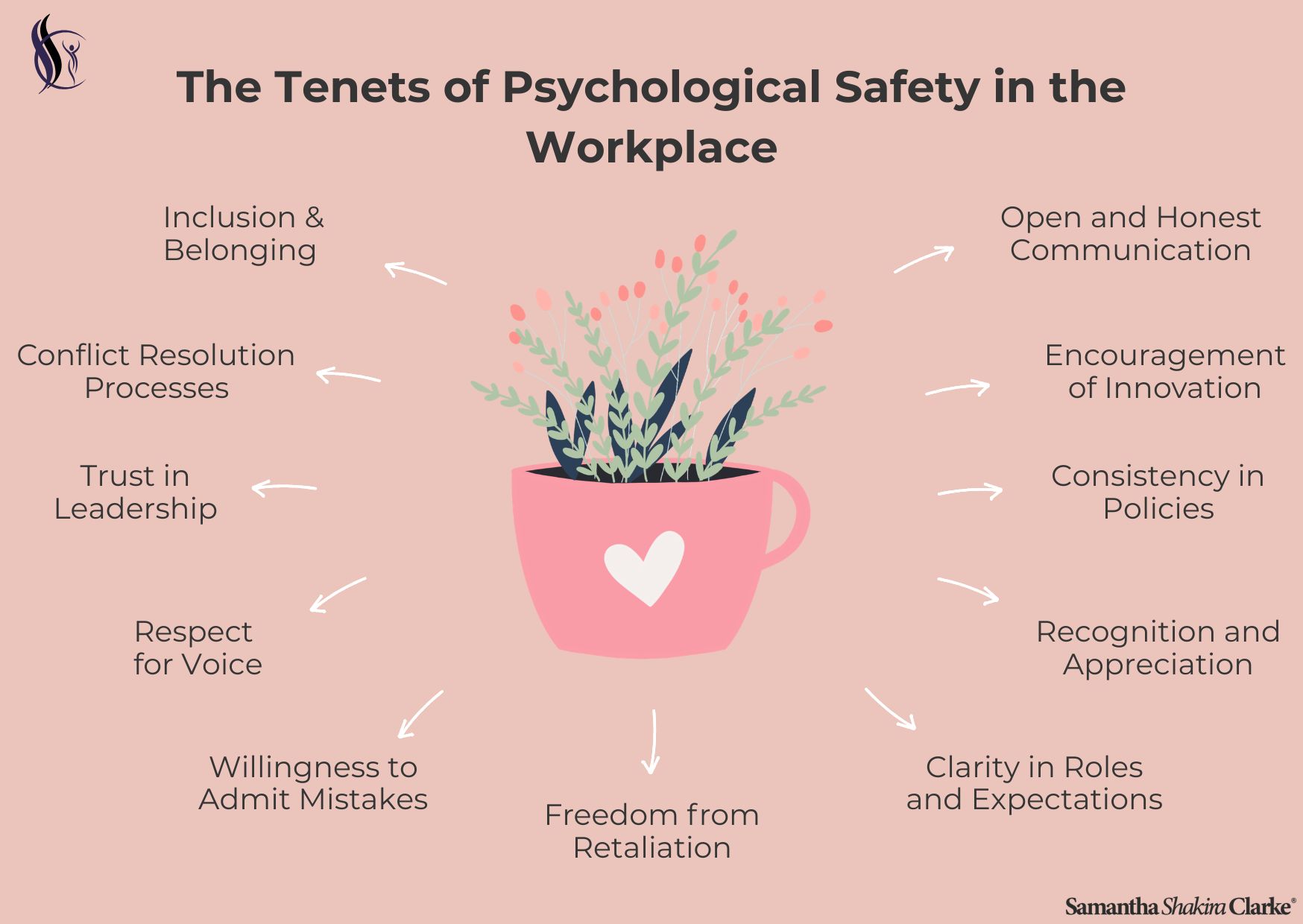
Inclusion means employees feel welcome and accepted for who they are. When people believe they belong, they contribute more openly and build stronger team connections. A culture of belonging reminds people they don’t have to leave parts of themselves at the door.
Trust is earned when leaders act consistently, keep promises, and model respect. Without trust, even the best initiatives fall flat. Teams move forward with confidence when leaders prove they are reliable and fair.
Every team member should feel that their voice matters. Respecting input encourages dialogue, prevents groupthink, and promotes fairness. When people feel heard, they are far more likely to stay engaged and committed.
When leaders admit errors, they show humility and encourage employees to do the same. This creates a culture where learning outweighs fear. Owning mistakes also builds credibility and strengthens relationships.
People must know they won’t be punished for speaking up. Protecting employees from backlash is essential for honesty and accountability. When safety is guaranteed, employees can raise concerns before they become crises.
Confusion breeds stress. Clear responsibilities help employees feel secure and prevent misunderstandings that undermine safety. Clarity also empowers teams to take ownership of their work.
Acknowledging contributions reinforces value and boosts morale. Employees who feel appreciated are more willing to take risks and innovate. Small gestures of recognition often have the biggest impact.
When policies are applied fairly, employees trust the system. Inconsistent rules create uncertainty and erode safety. Consistency reassures people that standards are not based on favoritism.
Teams thrive when new ideas are welcomed instead of dismissed. Innovation only happens in environments where risks are supported. Encouragement fuels creativity and helps organizations stay competitive.
Clear, transparent communication prevents rumors and builds alignment. It also ensures employees aren’t left guessing about critical decisions. Honest dialogue helps resolve issues quickly and strengthens trust.
Conflict is inevitable, but how it’s handled defines safety. Structured, fair resolution systems keep issues from festering. Addressing problems early also prevents lasting harm to relationships.
Workplaces that prioritize mental well-being send a strong signal: people matter as much as performance. This reduces stigma and builds loyalty. Real support goes beyond policies; it shows up in everyday actions.
Safety works only when everyone, leaders, managers, and employees, takes responsibility for their actions and behaviors. Accountability ensures that respect and fairness are not optional but expected. It keeps trust strong across the organization.
Assessing psychological safety starts with asking the right questions. Do employees feel safe raising concerns? Is feedback met with openness or defensiveness? Anonymous surveys, one-on-one check-ins, and leadership audits can provide valuable insight.
Organizations can also benchmark their culture against recognized frameworks, like the Canadian Standards Association’s National Standard for Psychological Health and Safety. By tracking results over time, leaders can identify where progress is being made and where action is still needed.

Workplaces are under pressure like never before. From hybrid work challenges to economic uncertainty, employees are stretched thin, and many are reconsidering where and how they want to work. Studies show that four in ten Gen Zs and over a third of millennials feel stressed or anxious most of the time (Deloitte).
This makes psychological safety in the workplace more critical than ever. It’s not just a culture booster, it’s a retention strategy, a legal necessity, and a performance driver. Organizations that ignore it will continue to lose talent, while those that embrace it will see higher engagement, better collaboration, and stronger resilience.
At SSC Corporate Wellness, we support workplaces in building safety at every level. From leadership training to well-being programs, our team can help you create a culture where people feel seen and supported.
Physical safety set the standard for the workplaces of yesterday. Today, psychological safety in the workplace defines the workplaces of tomorrow. By understanding and applying these 13 tenets, organizations can create environments where employees feel empowered to contribute fully, without fear. The choice is simple: invest in psychological safety now, or face the costly consequences of ignoring it.
And if you’re looking for guidance, SSC Corporate & Personal Wellness is here to support you. Reach out today at team@samanthashakiraclarke.com or book a free discovery call to explore how we can help your team feel safer, more connected, and supported at every level. Together, we can build a workplace where well-being is more than a policy, it’s a lived experience.


Samantha Shakira Clarke is an established keynote speaker, psycho-somatic coach, and founder of SSC Corporate Wellness—an organization dedicated to bringing mindfulness, nervous system education, and trauma-informed leadership practices into workplaces across North America and beyond.
Her approach bridges neuroscience, somatic psychology, and real-world application—offering sessions that are practical, engaging, and rooted in lived experience. She's worked with Fortune 500 companies, global tech firms, safety organizations, and youth advocacy centres, and is known for creating spaces that feel both human and impactful.


